
Online Marketing Scams: A Growing Threat in the Digital World
Online Marketing Scams: A Growing Threat in the Digital World
The digital marketing industry has created massive opportunities for businesses to grow online. However, along with genuine services, the rise of it is has also increased. Many businesses, especially small and medium enterprises, fall victim to fake promises, misleading guarantees, and unethical practices.
Understanding how these scams work is the first step toward protecting your brand, money, and reputation.
What Are Online Marketing Scams?
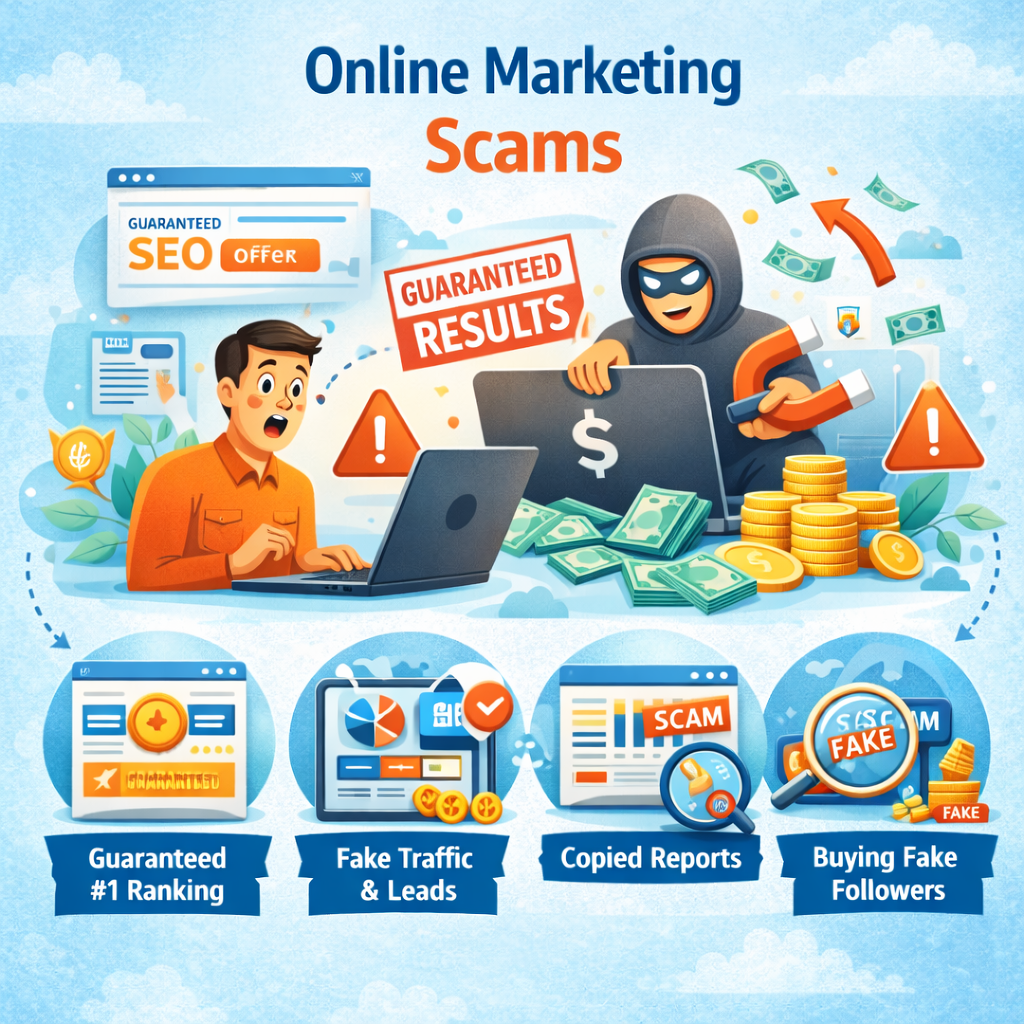
Online marketing scams are deceptive practices where individuals or agencies falsely claim to deliver digital marketing results such as instant rankings, guaranteed sales, or fake traffic. These scams often target business owners who are new to digital marketing or eager for fast growth.
Being aware of ita helps businesses make informed decisions and avoid costly mistakes.
Why Online Marketing Scams Are Increasing
The demand for online visibility has exploded. More businesses want SEO, social media marketing, paid ads, and lead generation. Scammers exploit this demand by offering unrealistic results at very low prices.
Lack of digital awareness and urgency for quick success are major reasons online marketing scams continue to grow worldwide.
Common Types of Online Marketing Scams
Guaranteed SEO Rankings
No legitimate marketer can guarantee a #1 ranking on search engines. Algorithms change constantly and rankings depend on multiple factors.
Promises of instant results are a classic sign of its designed to lure unsuspecting clients.
Fake Traffic and Fake Leads
Some scammers send bot traffic or fake leads to show short-term results. While numbers may increase, these visitors never convert into real customers.
This tactic damages trust and clearly falls under online marketing scams.
Copied Reports and False Analytics
Providing fake performance reports or copied dashboards is another common trick. These reports often show impressive growth that doesn’t match real business outcomes.
Such manipulation is a serious form of its that misleads business owners.
Social Media Growth Scams
Buying followers, likes, or comments may look attractive, but they offer no real engagement. These fake metrics can even harm brand credibility.
Artificial growth is one of the most visible in today’s digital space.
Warning Signs to Identify Online Marketing Scams
Recognizing red flags early can save time and money. Be cautious if a service provider:
Promises guaranteed or instant results
Avoids explaining their strategy
Offers extremely low pricing
Refuses to share case studies or references
Pressures you into quick decisions
These signs strongly indicate online marketing scams rather
How Online Marketing Scams Harm Businesses
Falling for scams doesn’t just waste money—it can damage your online reputation. Search engine penalties, poor user experience, and loss of customer trust are common consequences.
Businessoften need months to recover their rankings and credibility.
How to Protect Yourself from Online Marketing Scams
Choose Transparency Over Promises
Genuine marketers explain their process clearly and focus on long-term growth rather than quick wins. Transparency is the opposite of online marketing scams.
Check Experience and Expertise
Look for proven experience, real client testimonials, and verifiable results. Experienced professionals follow ethical practices and avoid misleading claims.
This aligns with E-E-A-T principles and helps you stay safe from online marketing scams.
Ask for Realistic Timelines
Digital marketing takes time. Honest professionals provide realistic expectations and measurable milestones instead of instant success.
Understanding this helps businesses avoid falling into online marketing scams.
Verify Online Presence
Check the agency’s website, content quality, social profiles, and online reviews. A strong digital footprint usually reflects credibility.
Scammers involved in online marketing scams often lack long-term online presence.
Role of Education in Avoiding Scams
Digital awareness is the strongest defense. Business owners who understand basic SEO, advertising, and analytics are less likely to be misled.
Education reduces vulnerability to online marketing scams and promotes smarter decision-making.
SEO and Trust: Why Google Values Authenticity
Search engines prioritize trustworthy, user-focused content. Websites that engage in unethical practices risk penalties and ranking losses.
Avoiding online marketing scams helps maintain compliance with SEO guidelines and ensures sustainable growth.
Future Outlook: Reducing Online Marketing Scams
As businesses become more informed and platforms strengthen policies, scams will become easier to identify. However, awareness remains essential.
Choosing ethical partners and focusing on long-term value is the best way to stay protected from online marketing scams.
Conclusion: Stay Smart, Stay Safe Online
The digital world offers powerful growth opportunities—but only when approached wisely. Understanding the enables businesses to protect their investment, reputation, and future success.
By choosing transparency, experience, and ethical strategies, businesses can confidently grow online without falling victim to deceptive practices.