
Social Media Marketing Strategy for Small Business in Today’s Digital World
Small businesses no longer need massive budgets to compete with big brands. With the right approach, social platforms can become powerful growth engines. A well-planned social media marketing strategy for small business helps attract customers, build trust, and increase sales without heavy advertising costs.
As customers spend more time on social networks, businesses that show up consistently and authentically gain a clear advantage.
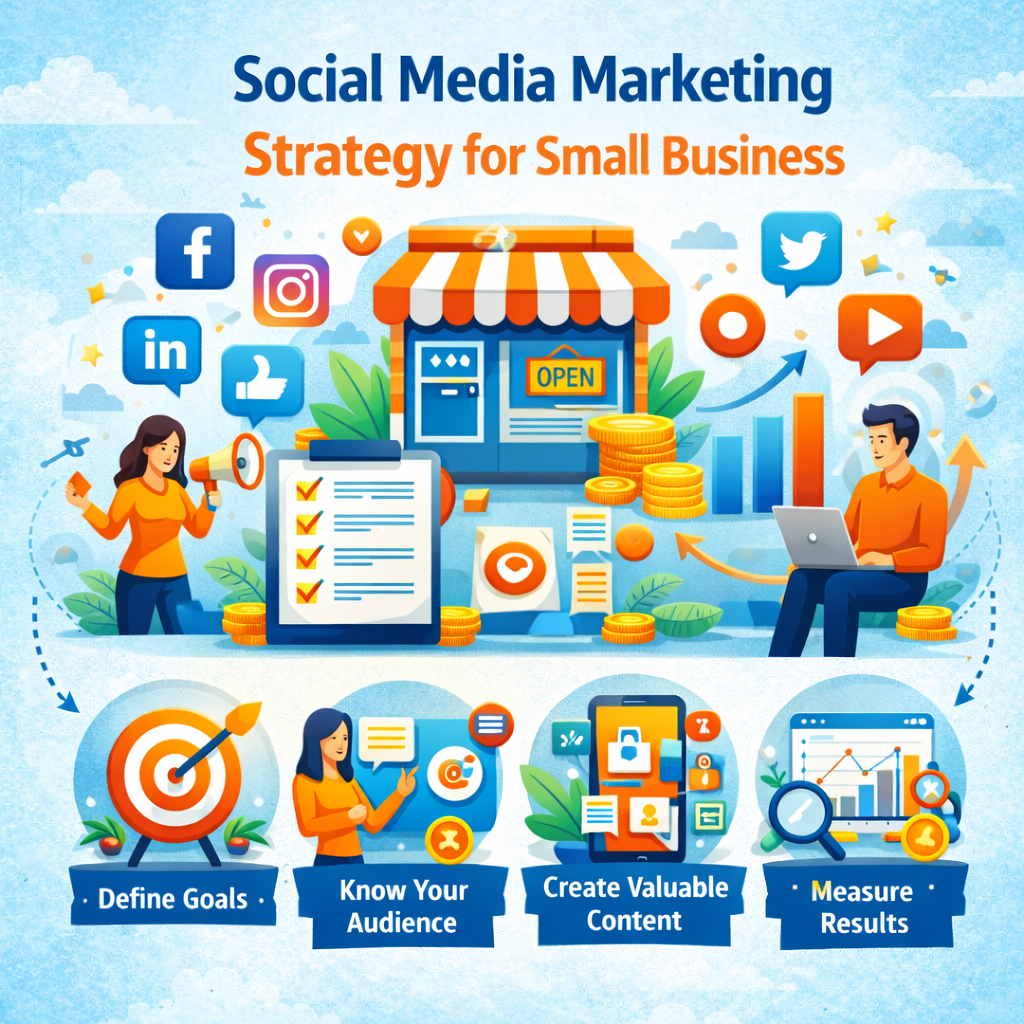
What Is a Social Media Marketing Strategy for Small Business?
A social media marketing strategy for small business is a structured plan that defines goals, target audience, platforms, content types, and performance tracking. Instead of random posting, it focuses on purposeful actions that deliver measurable results.
This strategic approach ensures time and resources are invested wisely while building a strong online presence.
Why Small Businesses Need a Clear Social Media Strategy
Without a plan, social media efforts often fail to deliver results. Random content may get likes but rarely converts into customers.
A defined social media marketing strategy for small business helps maintain consistency, align messaging with brand values, and improve engagement. It also allows businesses to compete effectively with larger brands by focusing on niche audiences.
Step 1: Define Clear Business Goals
Every successful strategy starts with goals. These may include brand awareness, lead generation, website traffic, or customer support.
When goals are clear, a social media marketing strategy for small business becomes focused and measurable, making it easier to track success and improve performance.
Step 2: Understand Your Target Audience
Knowing your audience is critical. Understand their age, interests, problems, and preferred platforms.
A strong social media marketing strategy for small business speaks directly to customer needs, making content more relevant and engaging. This also improves trust and brand credibility.
Step 3: Choose the Right Social Media Platforms
Not every platform suits every business. Instagram and Facebook work well for visual brands, LinkedIn is ideal for B2B services, and YouTube supports educational content.
Selecting the right channels is a core part of a successful social media marketing strategy for small business, helping maximize reach without spreading efforts too thin.
Step 4: Create Valuable and Consistent Content
Content is the heart of social media marketing. Educational posts, behind-the-scenes content, customer stories, and short videos perform well.
High-quality content supports E-E-A-T by demonstrating experience and expertise. A consistent posting schedule strengthens your social media marketing strategy for small business and keeps audiences engaged.
Step 5: Focus on Engagement, Not Just Promotion
Many small businesses make the mistake of only promoting products. Social media is about conversations and relationships.
Responding to comments, messages, and reviews builds trust. Engagement-driven content is a key element of an effective social media marketing strategy for small business.
Step 6: Use Paid Ads Strategically
Organic reach is valuable, but paid ads help scale faster. Even small budgets can deliver results when ads are well targeted.
Paid promotions enhance a social media marketing strategy for small business by reaching potential customers who may not find you organically.
Step 7: Track Performance and Optimize
Analytics reveal what works and what doesn’t. Monitor reach, engagement, clicks, and conversions regularly.
Data-driven decisions strengthen your social media marketing strategy for small business, ensuring continuous improvement and better ROI.
Common Mistakes Small Businesses Should Avoid
Posting inconsistently, copying competitors blindly, and ignoring analytics can limit success. Another common mistake is chasing followers instead of meaningful engagement.
Avoiding these pitfalls keeps your social media marketing strategy for small business aligned with long-term growth rather than short-term attention.
How Social Media Builds Trust and Brand Authority
Customers trust brands that share helpful information and communicate transparently. Testimonials, reviews, and educational content boost credibility.
By following ethical practices, a social media marketing strategy for small business supports trust, authority, and long-term customer loyalty.
SEO Benefits of Social Media Marketing
Although social signals are not direct ranking factors, strong social presence increases brand searches, backlinks, and website traffic.
This indirect impact makes a social media marketing strategy for small business valuable for overall digital marketing performance.
Future Trends in Social Media Marketing for Small Businesses
Short-form video, AI-driven personalization, and community-based marketing are shaping the future. Businesses that adapt early will stand out.
A flexible social media marketing strategy for small business allows quick adaptation to platform changes and user behavior.
Conclusion: Why Strategy Matters More Than Ever
Success on social media doesn’t happen by chance. A clear social media marketing strategy for small business turns effort into results by focusing on goals, audience, and value-driven content.
With consistency, engagement, and data-backed decisions, small businesses can build strong brands and achieve sustainable growth through social media.