
Social Media Marketing Advantage and Disadvantage Explained
Social media has transformed how businesses connect with their audience. From small startups to global brands, companies now rely on digital platforms to grow visibility, engage customers, and increase sales. However, while the benefits are impressive, challenges also exist. Understanding the social media marketing advantage and disadvantage is essential for creating a balanced and successful marketing strategy.
This guide explains both sides clearly so businesses can make informed decisions and use social media responsibly.
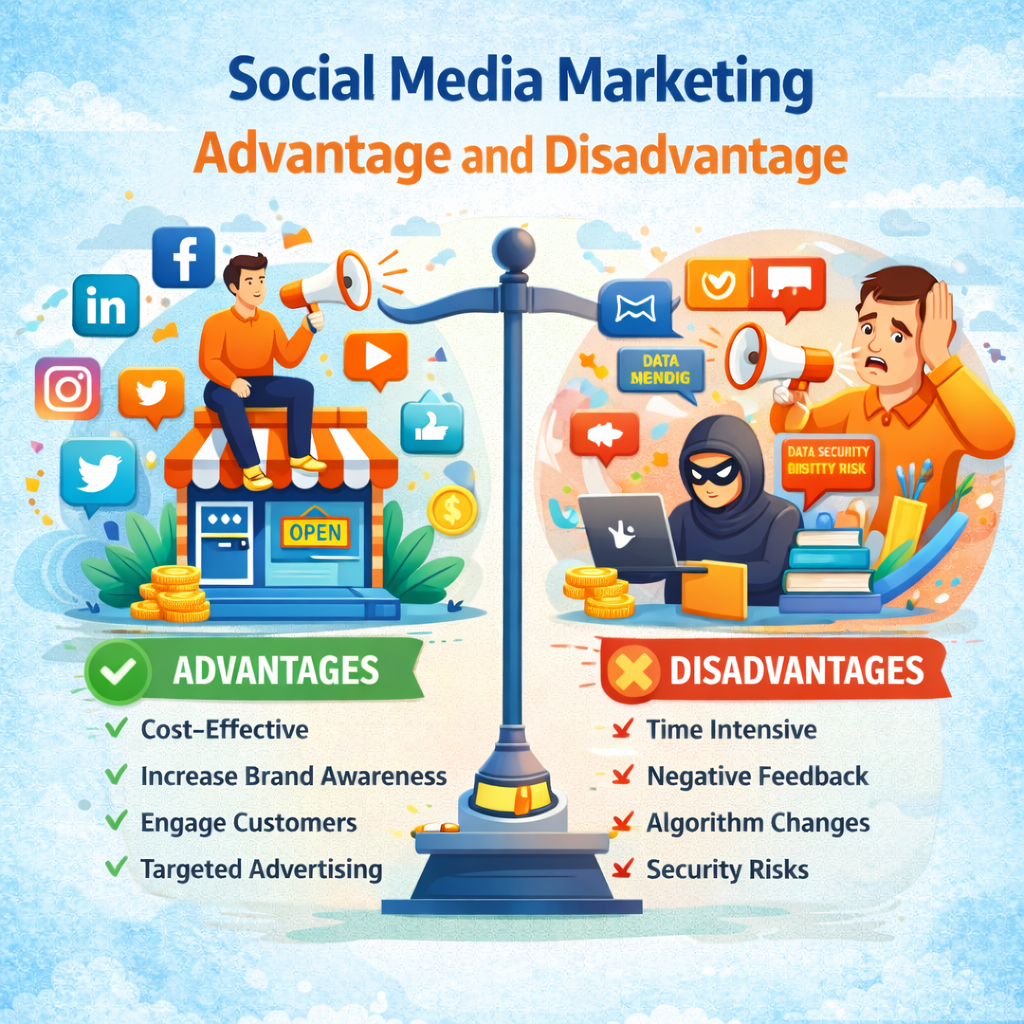
What Is Social Media Marketing?
Social media marketing refers to using platforms such as Facebook, Instagram, LinkedIn, X (Twitter), and YouTube to promote products, services, or brand messages. It includes content creation, paid advertising, community engagement, analytics tracking, and influencer collaborations.
Knowing the social media marketing advantage and disadvantage helps businesses align their efforts with realistic goals rather than unrealistic expectations.
Advantages of Social Media Marketing
1. Cost-Effective Marketing Channel
One major social media marketing advantage and disadvantage comparison starts with cost. Social media marketing is far more affordable than traditional advertising. Businesses can create free profiles and run paid ads with flexible budgets, making it ideal for startups and small businesses.
2. Improved Brand Awareness
Social platforms allow brands to reach large audiences quickly. Consistent posting, engaging visuals, and trending content help businesses stay visible. This wide exposure is a powerful social media marketing advantage for building brand recognition.
3. Direct Customer Engagement
Social media enables two-way communication. Businesses can respond to comments, messages, and reviews in real time. This interaction builds trust, loyalty, and long-term relationships, strengthening brand credibility.
4. Better Audience Targeting
Advanced targeting tools allow brands to reach specific audiences based on age, interests, location, and behavior. This precision targeting is another strong point when evaluating social media marketing advantage and disadvantage.
5. Measurable Performance and Analytics
Social media platforms provide detailed analytics, such as reach, engagement, clicks, and conversions. These insights help businesses improve campaigns and make data-driven decisions, increasing marketing efficiency.
Disadvantages of Social Media Marketing
1. Time-Consuming Process
A key concern in the social media marketing advantage and disadvantage discussion is time investment. Managing multiple platforms, creating content, responding to users, and monitoring analytics requires consistent effort and planning.
2. Negative Feedback and Public Criticism
Social media is public, and negative comments or reviews can spread quickly. If not handled professionally, criticism can harm a brand’s reputation and trustworthiness.
3. Constant Algorithm Changes
Social media algorithms change frequently, affecting reach and visibility. What works today may not work tomorrow, making it challenging for businesses to maintain consistent results.
4. Security and Privacy Risks
Account hacking, fake profiles, and data privacy issues are growing concerns. These risks highlight an important social media marketing disadvantage, especially for businesses handling sensitive customer data.
5. High Competition
Millions of brands compete for attention on social platforms. Standing out requires creativity, strategy, and continuous optimization, which can be challenging for new or small businesses.
How to Balance Social Media Marketing Advantage and Disadvantage
To maximize results, businesses should focus on strategy rather than trends. Clear goals, audience research, and content planning reduce risks. Regular performance analysis helps brands adjust campaigns and avoid common pitfalls.
Using professional tools, maintaining brand guidelines, and training social media managers also helps overcome disadvantages while leveraging benefits.
Role of E-E-A-T in Social Media Marketing
Applying the E-E-A-T framework strengthens online credibility:
Experience: Share real business insights, case studies, and customer stories
Expertise: Publish accurate, valuable, and industry-relevant content
Authoritativeness: Collaborate with trusted creators and platforms
Trustworthiness: Be transparent, consistent, and responsive
Following E-E-A-T principles improves long-term success despite the social media marketing advantage and disadvantage balance.
Conclusion
Understanding the social media marketing advantage and disadvantage is crucial for sustainable business growth. While social media offers affordability, reach, and engagement, it also demands time, consistency, and careful reputation management.
Businesses that approach social media with a strategic mindset, ethical practices, and data-driven decisions can turn challenges into opportunities and achieve lasting digital success.