
Online Marketing: A Complete Guide to Digital Business Growth
In today’s digital-first world, businesses can no longer rely only on traditional advertising. Customers search, compare, and purchase online. This shift has made online marketing an essential strategy for brands that want sustainable growth, visibility, and trust. Whether you are a startup, small business, or established company, understanding digital channels can give you a strong competitive advantage.
This guide explains what online marketing is, why it matters, and how to use it effectively for long-term success.
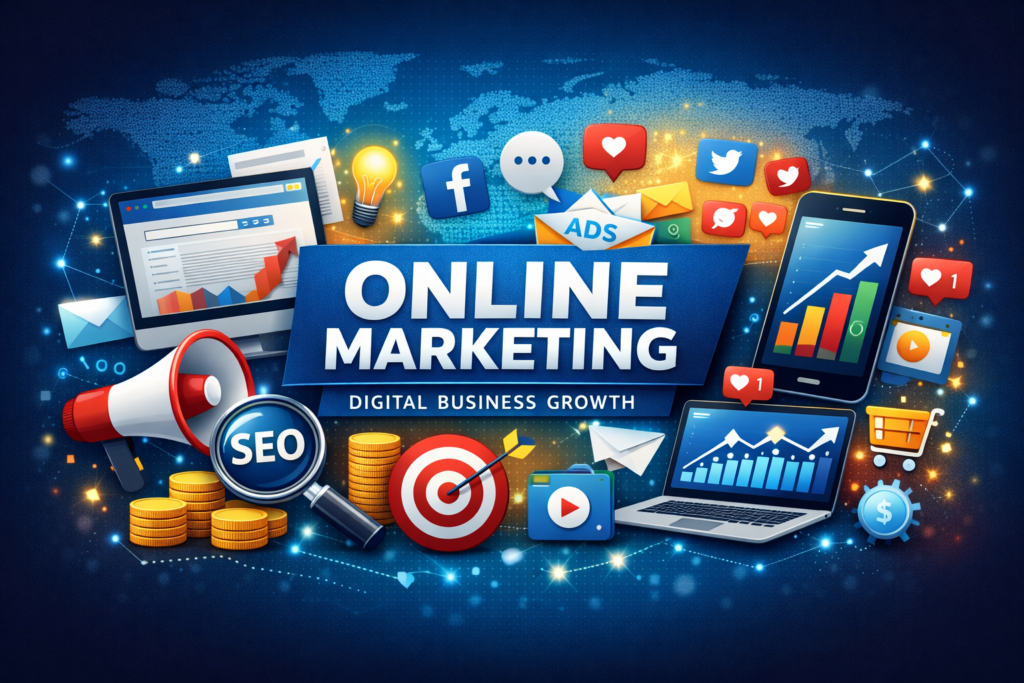
What Is Online Marketing?
Online marketing refers to promoting products or services through internet-based platforms such as search engines, social media, email, and websites. Unlike offline advertising, digital campaigns allow businesses to reach targeted audiences, track performance, and optimize results in real time.
The core purpose of online marketing is not just traffic generation, but building relationships, authority, and trust with users over time.
Why Online Marketing Is Important for Businesses
The way people interact with brands has changed drastically. Most customers research online before making a purchase decision. Here’s why it is crucial:
Global reach with local targeting
Cost-effective compared to traditional ads
Measurable performance and ROI
Stronger brand credibility
Better customer engagement
When implemented correctly, online marketing helps businesses connect with the right audience at the right time.
Key Types of Online Marketing Strategies
1. Search Engine Optimization (SEO)
SEO focuses on improving website visibility in search engines. High-quality content, keyword optimization, fast loading speed, and backlinks help your site rank higher and attract organic traffic. SEO builds long-term authority and trust, which aligns strongly with E-E-A-T guidelines.
2. Content Marketing
Content marketing involves creating helpful blogs, videos, guides, and infographics. Educational and experience-driven content positions your brand as an expert. Strong content is the backbone of online marketing because it supports SEO, social media, and lead generation.
3. Social Media Marketing
Social platforms allow brands to engage directly with users. Sharing valuable content, responding to comments, and running paid campaigns improves brand awareness and loyalty. Social proof also increases trust signals for your business.
4. Email Marketing
Email remains one of the highest ROI channels. Personalized newsletters, promotional emails, and educational sequences nurture leads and convert them into loyal customers. Email marketing strengthens authority and customer relationships.
5. Paid Advertising (PPC)
Pay-per-click advertising delivers instant visibility through search engines and social platforms. While paid ads bring quick results, combining them with organic online marketing strategies ensures consistent growth.
How Online Marketing Supports E-E-A-T
Google prioritizes Experience, Expertise, Authoritativeness, and Trustworthiness. Online marketing supports E-E-A-T by:
Sharing real-world experience through case studies
Publishing expert-driven and well-researched content
Building authoritative backlinks
Maintaining transparency with clear contact details and policies
Encouraging reviews and testimonials
Businesses that focus on value instead of shortcuts gain better rankings and customer trust.
Best Practices for Faster SEO Ranking
To optimize efforts for faster results, follow these best practices:
Use clear heading structure (H1, H2, H3)
Optimize meta titles and descriptions
Improve page speed and mobile usability
Use internal and external links
Publish consistent, original content
Optimize images with alt text
Focus on user intent, not just keywords
Search engines reward websites that provide helpful, reliable, and user-friendly experiences.
Common Mistakes to Avoid
Many businesses fail because they chase quick results. Avoid these mistakes:
-
Keyword stuffing instead of natural usage
-
Copying low-quality content
-
Ignoring analytics and data
-
Lack of consistency
-
Not building trust signals
Successful requires patience, strategy, and continuous optimization.
Future of Online Marketing
With AI, voice search, and personalization growing rapidly, the future of online marketing will focus more on user experience and authenticity. Brands that invest in quality content, ethical practices, and customer trust will dominate search results.
Staying updated with trends and adapting strategies will be key to long-term digital success.
Conclusion
Online marketing is no longer optional—it is a core business strategy. By combining SEO, content, social media, and trust-building practices, businesses can grow organically and sustainably. Focus on value, expertise, and user needs to achieve consistent results in the digital landscape.
If done right, It is not only drives traffic but also builds lasting relationships and brand authority.